Practical Guides · 23 September 2026
Clear video audio starts before the full take
A practical case for testing the room, the real activity and the recorded voice before committing to a full business video shoot.
By Juan Pablo Arce · 4 min read
In this article
A business video can look finished while still making the audience work too hard. The colour is consistent, the framing is careful and the speaker knows the subject. Yet the words compete with the room, the music or another voice.
The useful decision is not simply which microphone to buy. It is when the team decides that the speech is usable, and who is responsible for that judgement. If the first proper listen happens during editing, an avoidable recording problem has become a delivery problem.
This is a practical production perspective, not a report of a recent platform launch or a measured result from our client work.
Give sound a place in the approval process
A filming brief usually makes the visible deliverables easy to count: a main video, several shorter edits, different crops. Sound can remain an assumed quality rather than an explicit acceptance condition.
Replace that assumption with a plain sentence: the intended listener should be able to follow the important words without repeatedly guessing. This is a working editorial test, not an accessibility certification or a universal technical specification.
That distinction matters commercially. A recording may have to explain a service, introduce a person or demonstrate a process. In each case, the words carry information that a beautiful shot cannot supply on its own. Sound therefore deserves a decision point before the team commits to the full recording.
Choose the space by listening as well as looking
The W3C's audio and video production guidance, updated on 17 September 2024 and reviewed for this article on 23 September 2026, recommends recording away from external noise where feasible and avoiding rooms dominated by hard surfaces. It also addresses clear speech and background audio.
For a small business, that need not mean constructing a recording studio. It means comparing the actual options before choosing the most attractive background. Listen in the position where the speaker will sit or stand. Notice recurring interruptions. Ask what can reasonably be changed without disrupting the business or compromising safety.
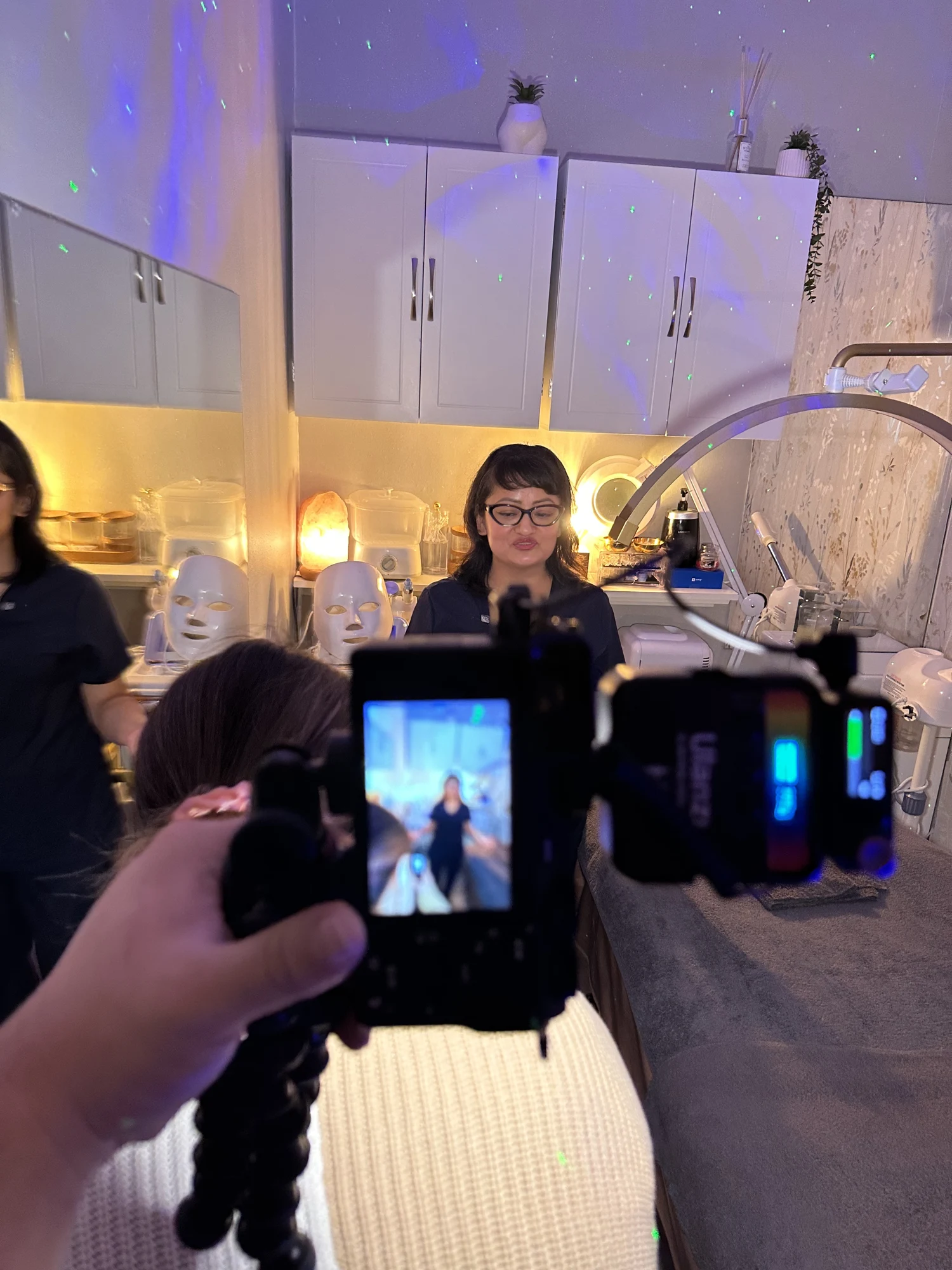
Our archive photograph from Clear Your Mind Studio shows Tania being filmed in the treatment room. It illustrates location-based production, not a sound test: a still image cannot establish the room's acoustics, the recording settings or the quality of the finished audio.
Cover photograph: The Creative Design UK, authorised studio archive. Image source. Capture date unconfirmed; held in the project by 15 September 2026. Original framing retained.
Approve a real sample, not a silent setup
A camera check can confirm the picture without answering whether the audience will understand the voice. Our suggested production gate is to record a short, representative passage and play it back before continuing.
Use normal delivery, not a quick “testing” whispered into the microphone. Include the movement the recording actually requires: turning towards a demonstration, addressing another person or speaking while working. The point is to test the planned activity rather than an artificially still version of it.
Assign one person to listen to the recorded file. Are key words clear? Does the voice remain understandable through the intended movement? Is there an interruption worth solving now? If the answer is uncertain, change one condition and compare another sample.
For example, a hypothetical service explainer might work better with the explanation recorded separately from the demonstration. That is a creative choice with a trade-off: it separates voice and action but may lose some spontaneity. The right answer depends on what the video needs to communicate, not on a rule that every business should use voiceover.
Keep post-production focused on meaning
Editing remains valuable. The mistake is treating future processing as permission to stop listening during capture. Any cleanup method should be judged against the recorded words and the intended character of the voice, not merely whether the result sounds more polished.
The final review should include the mix, not just isolated speech. Music may support the mood while making an explanation harder to follow. Test the balance on the devices that matter to the intended audience; a playback check is useful feedback, not proof that every listener's needs have been met.
Captions are a separate responsibility. W3C's caption guidance, also updated on 17 September 2024, explains that automatic captions need accuracy checks and often editing. Clearer audio does not remove that work. Names, specialist terms and essential non-speech information still need attention.
Make the next decision smaller
Not every shoot permits a controlled room. Live events, public spaces and spontaneous conversations come with constraints. The aim is not to eliminate all atmosphere or interrupt every human moment in pursuit of technical perfection.
Instead, agree what must be intelligible and what can remain part of the environment. For the next shoot, reserve a short test before the full take, name the person who can approve it and keep a fallback for essential information.
The business decision is modest: give someone permission to pause while a problem is still manageable. A microphone belongs on the equipment list. Listening belongs in the workflow.
Sources
Related work
0 likes
0 comments
Working on something this applies to? Tell us.
Start a project