Campaigns · 15 September 2026
What Juntos's food route teaches brands about turning attention into participation
A retrospective on London's June–July 2026 Ruta Gastronómica: why a shared invitation needs distinct restaurant stories, a usable destination and evidence beyond views.
By Juan Pablo Arce · 5 min read
In this article
A campaign can make a neighbourhood restaurant look interesting without helping anyone decide to visit. The gap is not necessarily a shortage of content. It may be the absence of a clear connection between the story, the offer and the next step.
Juntos's Ruta Gastronómica Iberoamericana offers a useful case for examining that connection. This is a retrospective on its June–July 2026 campaign in London, not an announcement of a new event or a currently available offer.
The central argument is simple: a shared campaign can organise attention across independent businesses, but each business still needs its own identity and a usable route from interest to participation.
A shared invitation, not a shared identity
The organiser's campaign page describes a six-week programme of regional food discovery and £8 signature dishes. El Ibérico's launch report, dated 1 June 2026, also records the common-price proposition and city-wide format.
Those details explain the invitation. They do not, by themselves, establish how many people visited a restaurant or whether participation was profitable.
A common proposition can reduce the amount of explanation each participant needs. A diner who understands the campaign has a starting point for exploring another restaurant. The shared frame creates continuity; the individual dish supplies a reason to choose.
For a business planning a collective promotion, that distinction matters. Standardise the information people need to participate, not everything that makes the businesses different. A neighbourhood trail does not need every venue to sound like the same brand.
Cultural detail gives the invitation substance
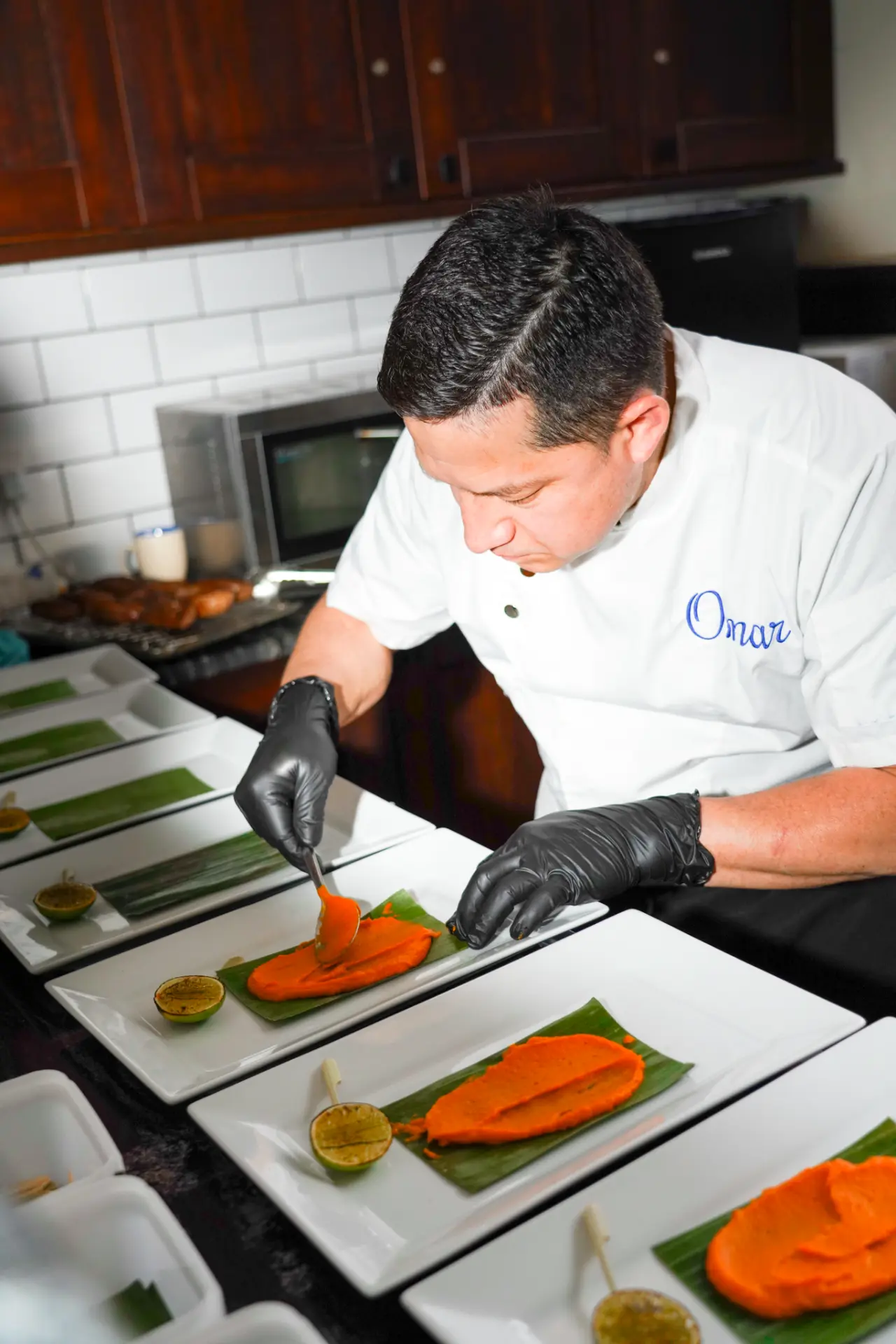
The organiser's JuntosHub posts include restaurant-specific stories: a two-part feature on Jenecheru and its Bolivian soup, and a separate sequence about choosing dishes at Maka. These are examples of published storytelling, not independent evidence of its commercial effect.
Their editorial value is specificity. A named restaurant, a recognisable dish and the people explaining it give the audience something more concrete than a general celebration of “Latin flavour”.
For a London agency with Colombian roots, this is an important creative distinction. Cultural familiarity should not be assumed, but neither should a story be flattened into a generic introduction for outsiders. Explain what a newcomer needs to understand while leaving the business's own vocabulary and perspective intact.
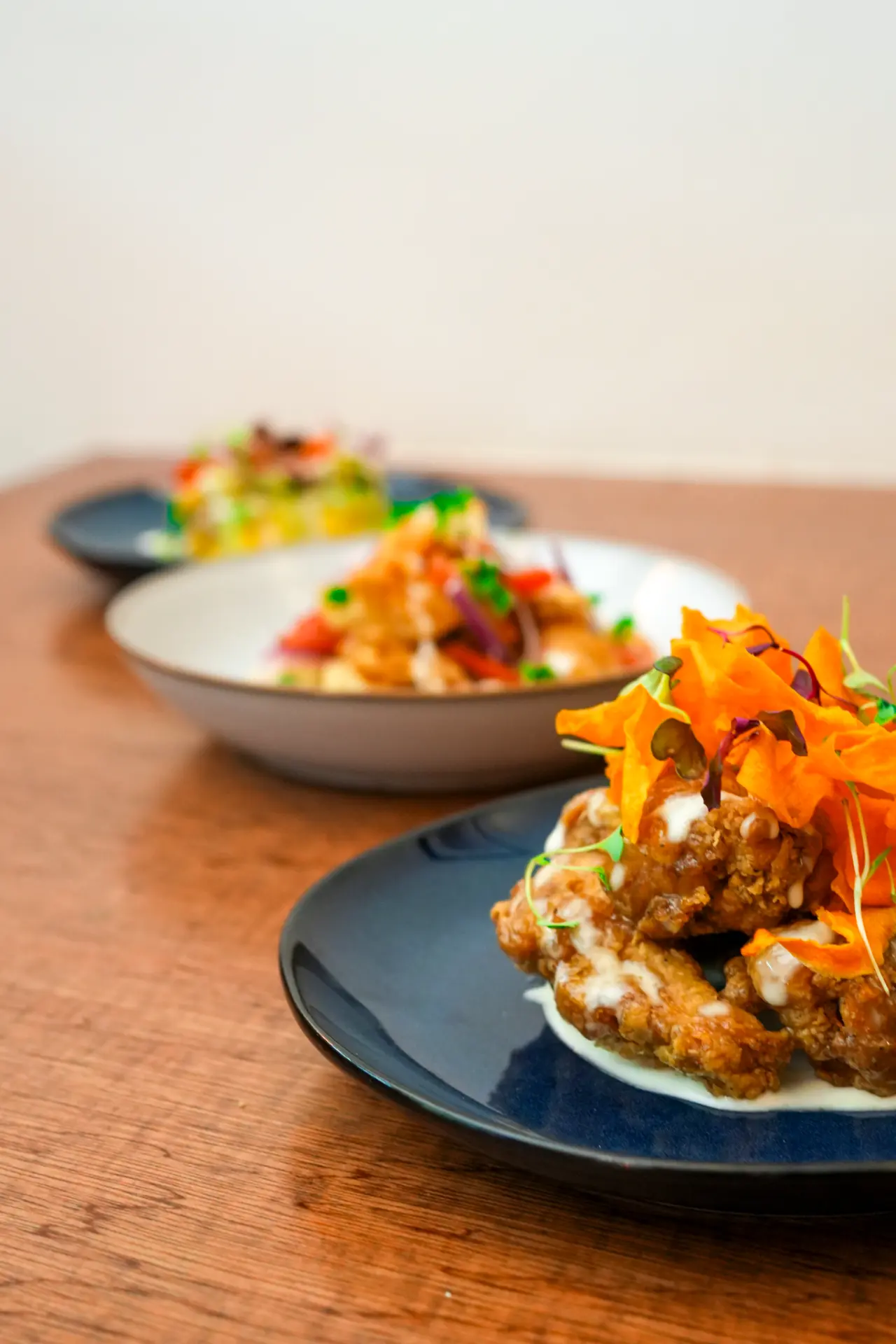
In practice, an interview prompt such as “What should a first-time visitor know about this dish?” is more useful than demanding a sweeping statement about an entire national cuisine. It produces an answer that can inform both a film and the page a viewer visits next.
The destination is part of the creative work
The official campaign site connects discovery with restaurant profiles on Negocios Latinos Hub and describes voting through those profiles. That is the published journey; this review has not independently audited every profile or measured completion.
The transferable lesson is to review the hand-off as carefully as the opening image. A post may create interest, but the destination must resolve the questions it raises.
Consider a hypothetical restaurant collaboration. A viewer sees a featured dish, follows a link and finds a general directory with no obvious matching entry. The film may be accurate and attractive, yet the next decision remains difficult. The brief should therefore identify the exact destination before the final call to action is approved.
Give one person responsibility for matching the restaurant name, dish description, availability and link across the film, caption and destination. Treat these as connected parts of one customer experience, even when different people produce them.
A coherent campaign is not proof of commercial success
There is a limit to what this case can establish. Our studio contributed campaign content and creative work, so this is an involved practitioner's analysis, not an independent effectiveness study.
The reviewed material demonstrates a campaign structure and examples of execution. It does not establish incremental revenue, profitable acquisition or repeat visits attributable to the work. Account-wide views and follower changes should not be substituted for those outcomes.
There are also business trade-offs. A fixed-price invitation may be easier to communicate than a varied offer, but suitability depends on each restaurant's costs, service capacity and objectives. Participation is not automatically the right decision for every venue.
For a future campaign, agree the evidence before launch. Distinguish content exposure, visits to the relevant listing, recorded offer purchases and subsequent custom. Define the period and collection method for each. A tagged link can help trace clicks; it cannot prove that someone ate at the restaurant.
The decision to make before commissioning more content
Choose one audience journey and test it end to end with someone unfamiliar with the business. Can they understand the offer, identify the venue and find the information needed to act?
If they cannot, improve that connection before increasing production volume. If they can, the team has a clearer basis for deciding which stories deserve further investment.
That is the useful lesson from studying a food route: strong creative work makes a particular business worth noticing, while a coherent campaign helps people understand what to do with that interest.
Editorial review: 15 September 2026. Campaign facts are attributed to the organiser and dated launch coverage. Recommendations and hypothetical examples are The Creative Design UK's analysis. Historical offers are not presented as currently available.
Sources
- Juntos CIC — official Ruta campaign page; June–July 2026 programme; checked 15 September 2026
- JuntosHub — organiser's restaurant stories and campaign posts; checked 15 September 2026
- El Ibérico — launch report · 2026-06-01
- Photographs: The Creative Design UK authorised Ruta campaign archive; June–July 2026, exact capture dates unconfirmed
Related work
Working on something this applies to? Tell us.
Start a project